11 Oct 2026
Tracing Cross-Border Data Flows in Digital Card Game Ecosystems
Digital card game platforms route player information through multiple jurisdictions on a daily basis, and researchers track these movements using server logs, API call records, and cloud provider metadata to map the paths data takes from user devices to processing centers. Studies show that game sessions generate location data, device identifiers, and gameplay metrics that often travel through content delivery networks located in different countries before reaching central databases, which creates layered records that compliance teams examine for adherence to local privacy statutes.
Mapping Infrastructure Components
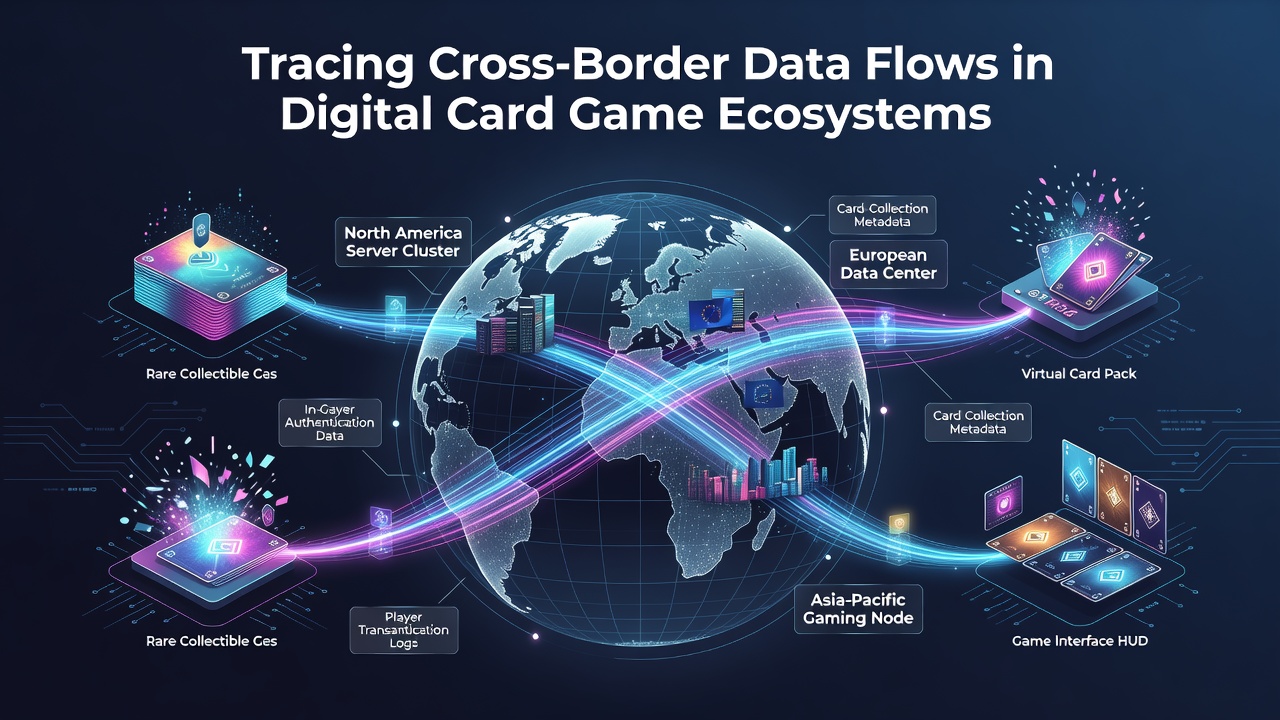
Cloud service providers host the majority of backend systems for these ecosystems, and data packets move between regions based on latency optimization algorithms that select the nearest available node while still complying with storage mandates in the player's home jurisdiction. Observers note that authentication services frequently operate from one continent while analytics engines process session data on another, so tracing requires correlation of timestamps across these distributed points. Network diagrams produced by industry analysts reveal that payment processing modules often connect to financial institutions in yet a third location, adding further hops that must be documented during audits.
Game developers implement logging frameworks that capture each data transfer event, and these logs include source IP ranges, destination endpoints, and encryption protocols applied at every stage. Experts have observed that packet inspection tools combined with flow monitoring software allow teams to reconstruct complete journeys, which proves essential when regulators request evidence of lawful transfer mechanisms such as standard contractual clauses or binding corporate rules.
Regulatory Requirements Across Regions
Legislation in multiple territories imposes specific obligations on cross-border transfers, and companies must verify that recipient countries offer adequate protection levels before routing personal data onward. According to OECD reports on digital trade, many jurisdictions updated their adequacy frameworks in 2025, which altered permissible routing patterns for gaming operators serving international audiences. Canadian authorities through the Office of the Privacy Commissioner have published guidance requiring organizations to conduct transfer impact assessments whenever data leaves the country, and similar requirements appear in Australian privacy amendments that took effect earlier in the decade.
October 2026 brought additional updates from the European Data Protection Board concerning supplementary measures for encryption during transit, and gaming platforms adjusted their key management systems to align with the new recommendations. These changes affect how session replays and tournament histories move between EU-based users and servers hosted elsewhere, prompting developers to maintain detailed inventories of every subprocess that handles identifiable information.
Technical Tracing Techniques
Engineers deploy distributed tracing systems that assign unique identifiers to each data element as it crosses boundaries, which enables reconstruction of full paths even when multiple microservices participate in a single transaction. Research indicates that combining these identifiers with geolocation databases yields accurate maps of where each category of information resides at any given moment. Teams also analyze DNS query patterns and certificate transparency logs to detect unauthorized rerouting that might occur through third-party vendors.
Encryption standards vary by region, and platforms maintain separate key stores to satisfy local decryption rules while still allowing global gameplay features. Data minimization practices reduce the volume transferred across borders, yet core elements such as account balances and achievement records still require synchronization that crosses multiple legal regimes. Automated compliance dashboards now aggregate these traces into reports that legal teams review before launching new game modes or expanding into additional markets.
Industry Practices and Documentation
Trade associations publish templates for data flow inventories that operators adapt to their specific architectures, and these documents list every subprocess along with its geographic footprint and legal basis for transfer. Companies that publish transparency reports disclose aggregate statistics on the volume of data leaving each jurisdiction, which provides external researchers with benchmarks for comparing practices across the sector. Figures from academic studies on digital entertainment platforms show that card game operators typically maintain between four and seven primary data centers, each governed by distinct regulatory overlays.
October 2026 saw several major providers release updated flow maps following infrastructure migrations to new regions, and these releases included breakdowns of how real-time game state information travels compared with stored replay files. Observers note that such disclosures help smaller studios understand the documentation burden they will face when scaling internationally.
Conclusion
Tracing cross-border data flows in digital card game ecosystems relies on integrated logging, regulatory mapping, and technical monitoring tools that together produce auditable records of every transfer. Platforms continue to refine these processes as new adequacy decisions and technical standards emerge, and the resulting documentation supports both operational stability and compliance verification across the jurisdictions where players connect.