27 Sep 2026
Charting Compliance Changes in Mobile Gaming Regulations Across Major Jurisdictions
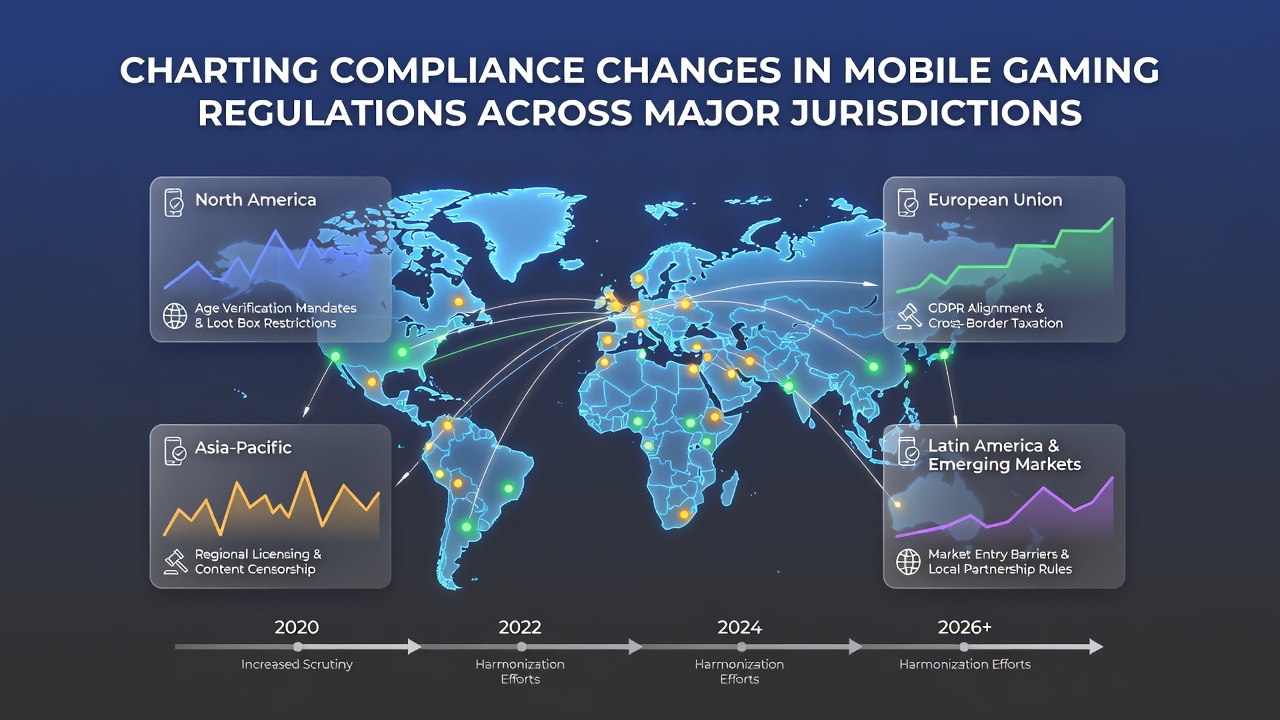
Regulatory frameworks for mobile gaming have shifted across several major jurisdictions in recent years, and these adjustments address data security, age verification, and payment processing in applications that deliver casino-style games and slots to smartphones and tablets. Governments and oversight bodies continue to refine rules as technology evolves, and data from industry reports shows increased focus on cross-border operations where apps serve users in multiple regions simultaneously.
United States State-Level Developments
Individual states in the US maintain separate licensing systems for mobile gaming operators, and this patchwork approach requires companies to adapt compliance protocols for each market they enter. New Jersey and Pennsylvania have updated their digital platform standards to include enhanced encryption mandates for user data transmitted through apps, while Michigan and West Virginia introduced rules in 2025 that tie licensing renewals to real-time monitoring of responsible gaming features. Observers note that these changes align with broader federal discussions on consumer protection, yet enforcement remains at the state level where agencies review app submissions for geofencing accuracy and transaction logging capabilities.
Canadian Provincial Frameworks
Ontario's Alcohol and Gaming Commission of Ontario has expanded its iGaming standards to cover mobile-specific compliance elements such as in-app purchase verification and third-party audit requirements for random number generators. Data from the Alcohol and Gaming Commission of Ontario indicates that operators must now submit quarterly reports detailing how their apps handle player limits and self-exclusion lists. Other provinces watch these implementations closely, and Quebec and British Columbia have signaled similar updates scheduled for rollout phases beginning in late 2026.
European Union and National Variations
Across the European Union, mobile gaming regulations intersect with the Digital Services Act and updated consumer protection directives, which impose obligations on app stores and developers regarding transparency in game mechanics and advertising targeting. Germany and the Netherlands have tightened rules on deposit limits within mobile interfaces, and these requirements force operators to integrate automated checks that pause sessions when thresholds are reached. Research from academic institutions tracking regulatory impacts shows that such measures have prompted technical upgrades in user interface design across compliant applications.
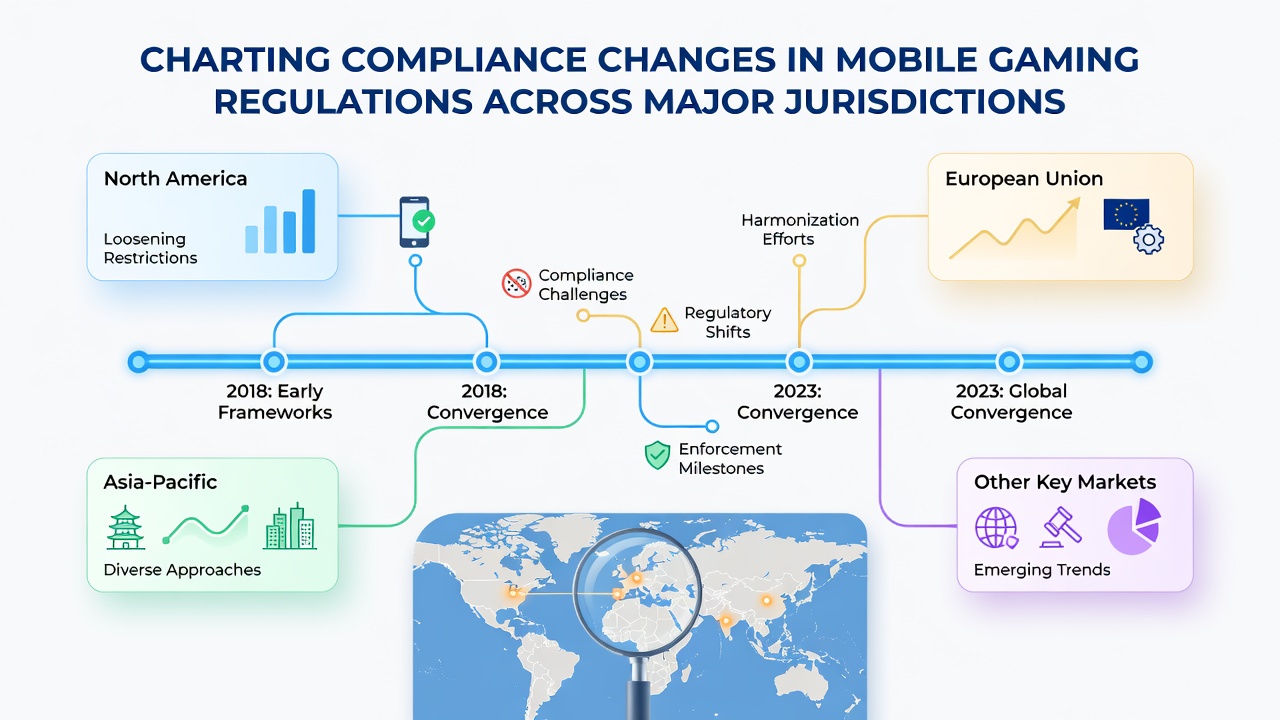
Australia's regulatory environment under the Australian Communications and Media Authority continues to enforce the Interactive Gambling Act through mobile app store monitoring and geo-blocking enforcement. Figures from the Australian Communications and Media Authority reveal rising numbers of compliance notices issued to overseas operators whose apps reach Australian users without proper licensing. In Asia, Singapore's Gambling Regulatory Authority has introduced pilot programs for licensed mobile platforms that incorporate biometric authentication, and these trials inform potential expansions planned around September 2026.
Common Compliance Themes Across Regions
Age verification technology appears in updated guidelines from multiple regulators, and many jurisdictions now require apps to combine document scanning with behavioral analytics to confirm user eligibility. Payment processing rules have also tightened, with emphasis on preventing money laundering through transaction pattern analysis built into gaming software. Experts tracking these patterns observe that operators increasingly rely on specialized compliance software to manage differing standards without duplicating development efforts for each market.
Conclusion
Jurisdictions worldwide continue to adjust mobile gaming regulations to balance innovation with consumer safeguards, and these ongoing refinements shape how applications reach users while meeting local standards. Companies operating across borders monitor these developments through industry associations and government portals to maintain alignment as new provisions take effect.